


Створення безпечного освітнього простору — є нашим пріоритетом
Олеся Мандзюк, начальниця Управління розвитку освіти ЛМР розповідає, чому місто підтримує та реалізує проєкт «ГОВОРИ»
ПРО ПРОЄКТ
Creating a Safe Educational Environment Is Our Priority
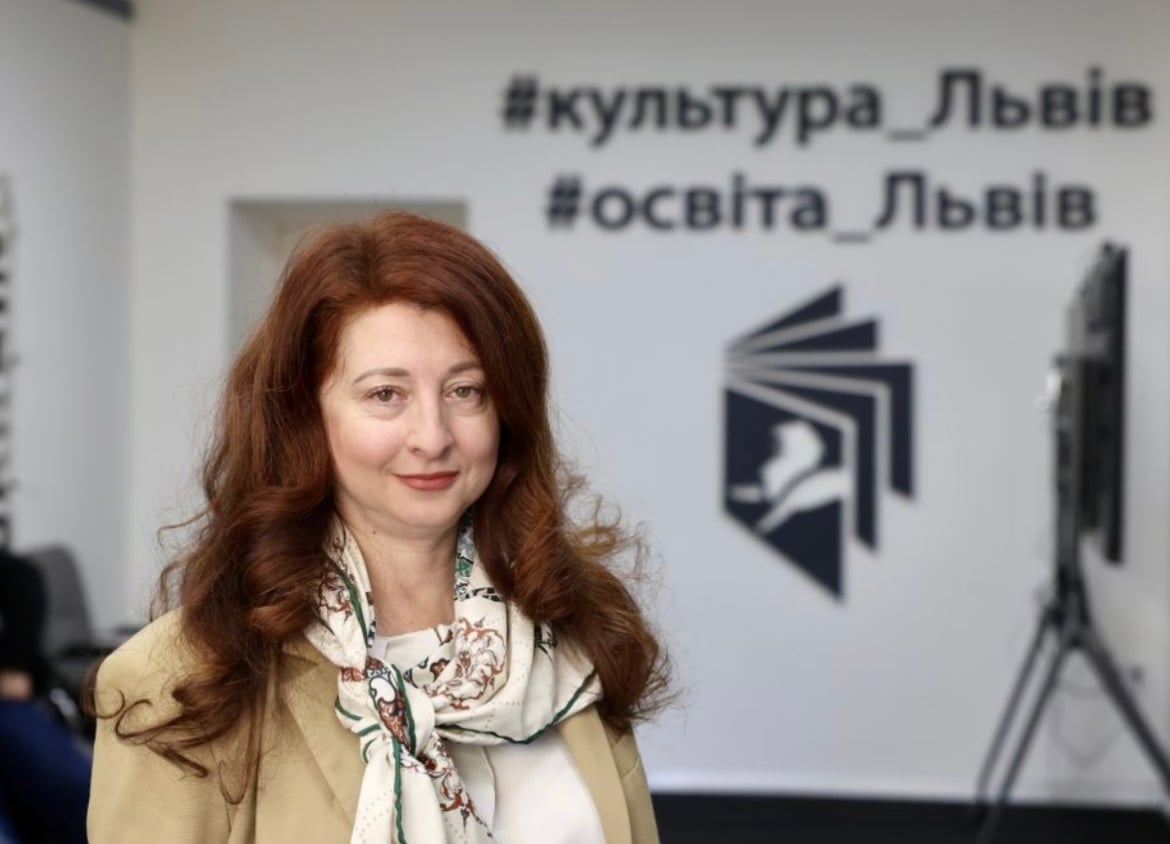
Olesia Mandziuk, Head of the Education Development Department of the Lviv City Council, explains why creating a violence-free environment is crucial for Lviv and how the “HOVORY” project helps children feel safe.
This tool is essential for Lviv’s educational ecosystem because it is the fastest and safest way for a child to report that something is happening to them — at school or outside of it — especially when they want to speak up but don’t know whom to turn to or how. It is a continuous, accessible, and secure communication channel.
When a child knows that in any situation — even if it’s not bullying, but simply something that worries them — they can report it to adults in a convenient way, it creates a strong sense of safety. Especially since the tool is integrated into the electronic school diary, which students already use and understand.
This is not about solving individual problems in isolation, as schools used to do in different ways. It is about shaping the culture of the environment and of communication, and about zero tolerance for disrespect or aggression. Children must grow up in an atmosphere where boundaries exist and where they understand how to respond to aggression without resorting to violence. We want this generation to be more authentic — and more protected.

What was the key argument for the city — why is this project so important for Lviv’s educational environment?
We expected a decrease in cases that could be classified as bullying or harassment. We expected school administrations to have precise action algorithms when a child feels distressed or reports a problem. We also hoped that society as a whole would become less tolerant of aggressive behavior.
The most important thing is safety — not only physical but also emotional: children’s comfort and calmness at school and in interaction with peers. We see many worrying cases on social media, so this tool provides an additional opportunity to respond quickly.
What outcomes did you expect when deciding to implement this project in schools?
We can share efficient advice. If a city has a tool, such as an electronic school diary, accessible to all educational institutions, it can serve as the foundation for programs that ensure transparent, rapid feedback to education authorities.
There is no need to rush — and no need to be afraid of testing. It is better to invest more time in training and preparation. We carefully reviewed the privacy policy to minimize risks for children who report problems.
If there is technical capacity, an information platform, goodwill, and an understanding of the project’s value, it is worth starting. We are also ready to support colleagues in technical and organizational aspects, because we already have practical experience.
Have you already noticed changes in schools that joined “HOVORY”?
The safety button started working in Lviv after October 6, and within a month, we received around 30 reports from various schools. All of them were reviewed, and where support was needed, it was provided.
Back in August, before the school year began, we met with school principals and those responsible for the “HOVORY” safety button in each district. We had honest conversations and heard all the questions and concerns. After that, together with colleagues from the Child Dignity Center at UCU and the NIT team, we refined the procedures and response protocols.
Voluntarily, we selected four schools for a pilot launch to see what worked well and what needed improvement. After two weeks of testing and confirming readiness, we launched the project in 128 schools across Lviv in early October.
This is not only about conflicts between students. These can also be situations outside school, issues with peers, family problems, or difficulties involving teachers. Children must grow up understanding that they are safe and that speaking about their experiences is normal. We do not want to cultivate a culture of fear, intimidation, or silence.
What advice would you give to colleagues from other cities regarding organization, school support, and communicatio?
The full interview is available in video format.


cdc@ucu.edu.ua
© Ukrainian Catholic University. All rights reserved. 2026


17 Illia Sventsitskoho St., Lviv, 79011, Ukraine


Site navigation
Contacts
“When children speak - schools change”


